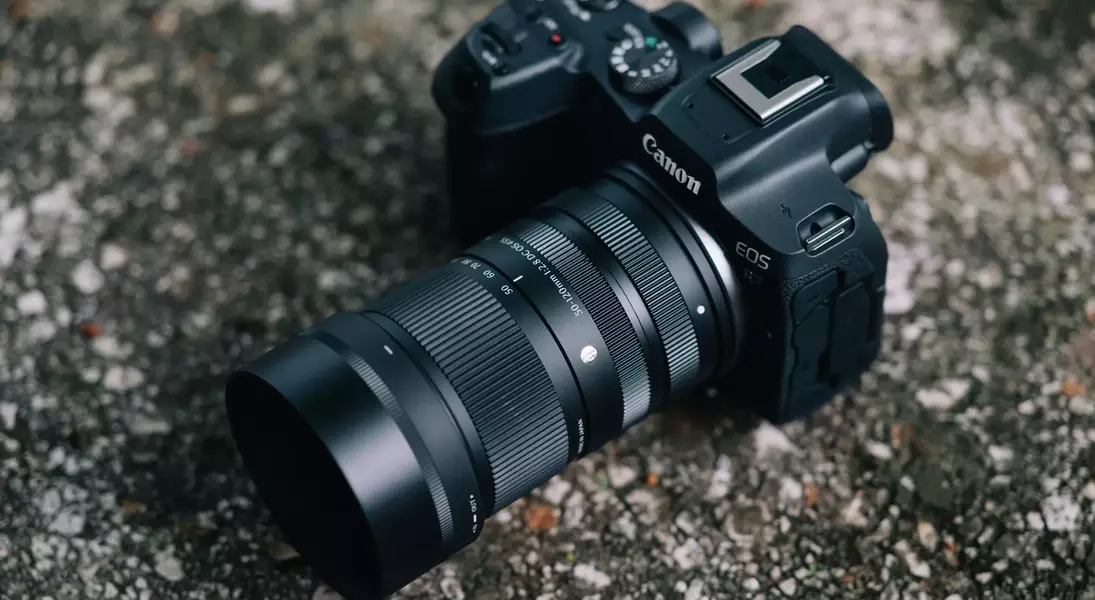
Sigma has launched a groundbreaking addition to its lens lineup: the 50-120mm F2.8 DC OS Contemporary, marking the completion of its f/2.8 zoom lens collection for APS-C cameras. This innovative telephoto zoom lens is designed to empower photographers using crop-sensor cameras, offering an impressive focal range equivalent to 75-180mm. Its introduction challenges the notion that premium photographic capabilities are exclusive to full-frame systems, making high-quality imaging more accessible and portable than ever before.
Sigma's Game-Changing Lens for Sony, Canon, and Fujifilm Users
The highly anticipated Sigma 50-120mm F2.8 DC OS Contemporary lens is poised for release on October 22nd, catering specifically to Sony E, Canon RF, and Fujifilm X mount systems. This new offering fills a notable gap in the market, as Sony and Canon currently lack comparable f/2.8 telephoto zoom lenses for their APS-C mirrorless camera lines. While Fujifilm offers its XF 50-140mm f/2.8 R LM OIS WR, Sigma's alternative distinguishes itself with a significantly lighter build and a more attractive price point. However, Nikon enthusiasts may find themselves disappointed, as a compatible version for the Nikon Z mount has not yet been announced, despite Sigma's simultaneous release of a 16-300mm travel zoom for Nikon Z.
This new Sigma lens stands out for its exceptional blend of compactness, minimal weight, and affordability. Measuring merely 10cm (4 inches) in length and weighing a mere 13.4oz (380g), it presents a stark contrast to bulkier full-frame telephoto zooms. Priced at approximately 9 / £699 (around AU,300), it offers a cost-effective solution without compromising performance. For perspective, the combined weight and cost of Sigma's entire f/2.8 APS-C zoom trinity (which includes the 10-18mm F2.8 and 18-50mm F2.8 lenses) are less than that of many professional full-frame telephoto lenses, which can easily exceed ,000 / £2,000. Although the 50-120mm doesn't extend to the 200mm focal length of some full-frame counterparts and isn't compatible with teleconverters, its design prioritizes portability and usability. This strategic balance of features makes it an incredibly compelling option for APS-C photographers, with many in the community already hailing it as a potential legend. This lens not only enhances the capabilities of APS-C cameras but also makes high-quality telephoto photography more accessible to a wider range of users, proving that impressive photographic tools can be both powerful and conveniently sized.
From a journalist's perspective, the unveiling of Sigma's 50-120mm F2.8 DC OS Contemporary lens represents a significant shift in the camera lens landscape, particularly for APS-C users. It underscores a growing trend where manufacturers are recognizing and investing in the potential of crop-sensor cameras, moving beyond the traditional focus on full-frame systems. This lens offers a powerful argument against the perceived necessity of full-frame gear for professional results, providing an affordable, lightweight, and versatile alternative that could democratize high-quality photography. The enthusiasm from the photography community, evident in early reactions, signals a strong demand for such innovative products. This development highlights the importance of adaptability and consumer-centric design in the competitive camera market. It also challenges photographers to re-evaluate their gear choices, encouraging them to consider how lighter, more compact, yet high-performing lenses can enhance their creative process and open new avenues for capturing stunning imagery without the burden of heavy equipment or exorbitant costs.